Multiplication Zones (18-30)
Multiplication is the form of expression set equal to the inverse function of symmetrical exponentation which stand as multiplicative identity reflects a point across the origin.
This section is referring to wiki page-9 of gist section-5 that is inherited from the gist section-59 by prime spin-18 and span- with the partitions as below.
- Symmetrical Breaking (spin 8)
- The Angular Momentum (spin 9)
- Entrypoint of Momentum (spin 10)
- The Mapping of Spacetime (spin 11)
- Similar Order of Magnitude (spin 12)
- Searching for The Graviton (spin 13)
- Elementary Retracements (spin 14)
- Recycling of Momentum (spin 15)
- Exchange Entrypoint (spin 16)
- The Mapping Order (spin 17)
- Magnitude Order (spin 18)
The multiplication zones is a symmetric matrix representing the multilinear relationship of a stretching and shearing within the plane of the base unit.
Palindromic Sequence
You may notice that there are twists and turns until 19 abuts 2 therefore this addition zone takes only the seven (7) primes out of the 18's structure of True Prime Pairs.
0 (1, 1) blue_0  ◄--- 0
1 (1, 1) blue_1
2 (1, 1) blue_2
3 (1, 1) blue_3
4 (1, 1) blue_4
5 (2, 1) purple_5
6 (2, 1) purple_0
7 (3, 1) red_1
8 (3, 1) red_2
9 (3, 1) red_3
10 (3, 1) red_4
11 (4, 1) yellow_5
12 (4, 1) yellow_0
13 (5, 1) green_1
14 (5, 1) green_2
15 (5, 1) green_3
16 (5, 1) green_4
17 (0, 1) cyan_5
18 (0, 1) cyan_0  ◄---  18
-----
19 (1, 1) blue_1
20 (1, 1) blue_2
21 (1, 1) blue_3
22 (1, 1) blue_4
23 (2, 1) purple_5
24 (2, 1) purple_0
25 (2, 1) purple_1
26 (2, 1) purple_2
27 (2, 1) purple_3
28 (2, 1) purple_4
29 (2, -1) blue_5
30 (2, -1) blue_0  ◄--- 30
Cell types are interesting, but they simply reflect a modulo 6 view of numbers. More interesting are the six internal hexagons within the Prime Hexagon. Like the Prime Hexagon, they are newly discovered. The minor hexagons form solely from the order, and type, of primes along the number line (HexSpin).
$True Prime Pairs:
(5,7), (11,13), (17,19)

layer | node | sub |  i  |  f
------+------+-----+----------
      |      |     |  1  | ----------‹ 289® ‹--------
      |      |  1  +-----+                           |
      |  1   |     |  2  | (5)                       |
      |      |-----+-----+                           |
      |      |     |  3  |                           |
  1   +------+  2  +-----+----                       |
      |      |     |  4  |                           |
      |      +-----+-----+                           |
      |  2   |     |  5  | (7)                       |
      |      |  3  +-----+                           |
      |      |     |  6  |                          11s
------+------+-----+-----+------      } (36)         |
      |      |     |  7  |                           |
      |      |  4  +-----+                           |
      |  3   |     |  8  | (11)                      |
      |      +-----+-----+                           |
      |      |     |  9  |                           |
  2   +------|  5  +-----+-----                      |
      |      |     |  10 |                           |
      |      |-----+-----+                           |
      |  4   |     |  11 | (13) -----› 329® ›---------
      |      |  6  +-----+               ✓
      |      |     |  12 |-----------‹ 168® ‹--------
------+------+-----+-----+------------               |
      |      |     |  13 |                           |
      |      |  7  +-----+                           |
      |  5   |     |  14 | (17)                      |
      |      |-----+-----+                           |
      |      |     |  15 |                           7s
  3   +------+  8  +-----+-----       } (36)         |
      |      |     |  16 |                           |
      |      |-----+-----+                           |
      |  6   |     |  17 | (19)                      |
      |      |  9  +-----+               ✓           |
      |      |     |  18 | ----------› 360® ›--------
------|------|-----+-----+------
Below is a model of E11 (shown by 11 dimensions). Its absolute dimensions represent all related key knowledges of modern physics.
It turns out that quantum string theory always destroys the symmetries of classical string theory, except in one special case: when the number of dimensions is 10. Moreover this model represents Quark-Gluon Plasma, with all of the fundamental forces in the early stage after Big Bang which probably comes from Absolute Nothingness.
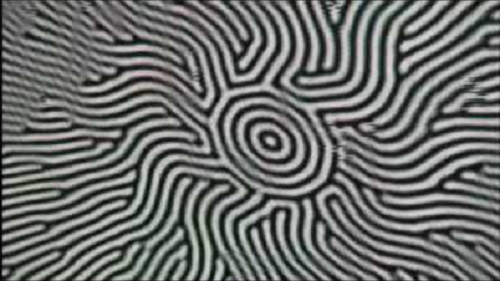
Mathematics grows when it finds new objects that capture some of the most important relationships between numbers, equations and shapes.
The first 1000 prime numbers are silently screaming: “Pay attention to us, for we hold the secret to the distribution of all primes!” We heard the call, and with ‘strange coincidences’ leading the way have discovered compelling evidence that the 1000th prime number,
- 7919, is the perfectly positioned cornerstone of a mathematical object with highly organized substructures and stunning reflectional symmetries.
- This object is dually enveloped by 892 = 7921 and 7920 = 22 x 360 in conjunction with 1092 − 892 = 3960 = 11 x 360 (while mindful that both 1/89 and 1/109 have the Fibonacci sequence secreted in their decimal expansions).
- And we note the astonishing fact that primes 11 + 89 + 109 + 7919 = 8128, the fourth perfect number, the first three of which are 6, 28, and 496.
By the matrices shown in the picture below it is clearly shows that there is a fascinating connection between prime numbers and the Golden ratio.
1000 x (π(11) + 360) days = 1000 x 365 days = 1000 years
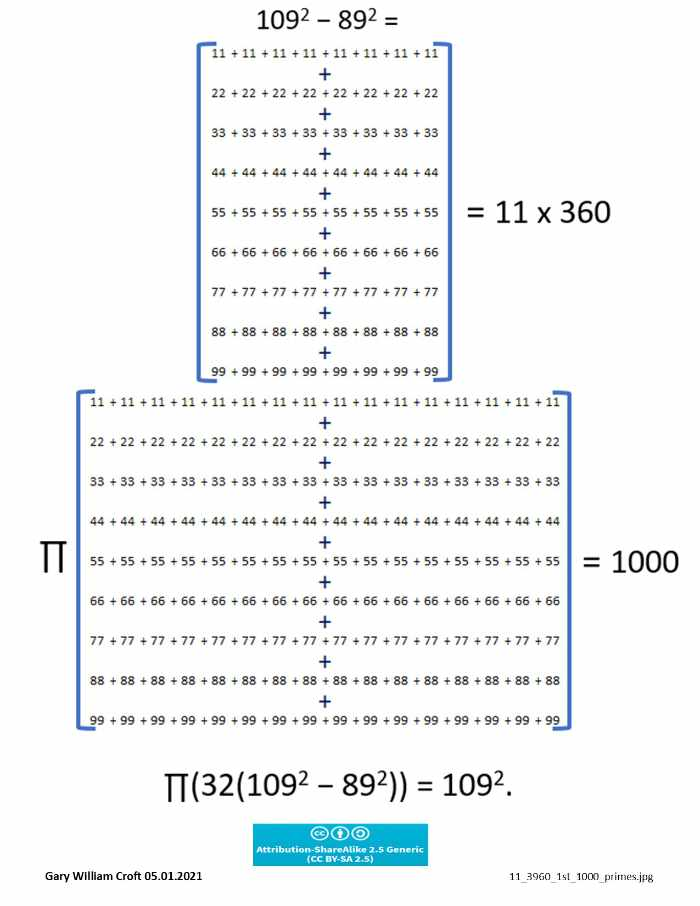
Both 1/89 and 1/109 have the Fibonacci sequence encoded in their decimal expansions illustrates a period-24 palindromic that bring the powers of pi.
When the digital root of perfect squares is sequenced within a modulo 30 x 3 = modulo 90 horizon, beautiful symmetries in the form of period-24 palindromes are revealed, which the author has documented on the On-Line Encyclopedia of Integer Sequences as Digital root of squares of numbers not divisible by 2, 3 or 5 (A24092):
1, 4, 4, 7, 1, 1, 7, 4, 7, 1, 7, 4, 4, 7, 1, 7, 4, 7, 1, 1, 7, 4, 4, 1
In the matrix pictured below, we list the first 24 elements of our domain, take their squares, calculate the modulo 90 congruence and digital roots of each square, and display the digital root factorization dyad for each square (and map their collective bilateral 9 sum symmetry). (PrimesDemystified)

Geometrically, a transformation matrix rotates, stretches, or shears the vectors it acts upon. The corresponding eigenvalue is often represented as the multiplying factor.
Based on the idea of stable, knotted vortices in the ether or aether, it contributed an important mathematical legacy.
- The vortex theory of the atom was a 19th-century attempt by William Thomson (later Lord Kelvin) to explain why the atoms recently discovered by chemists came in only relatively few varieties but in very great numbers of each kind.
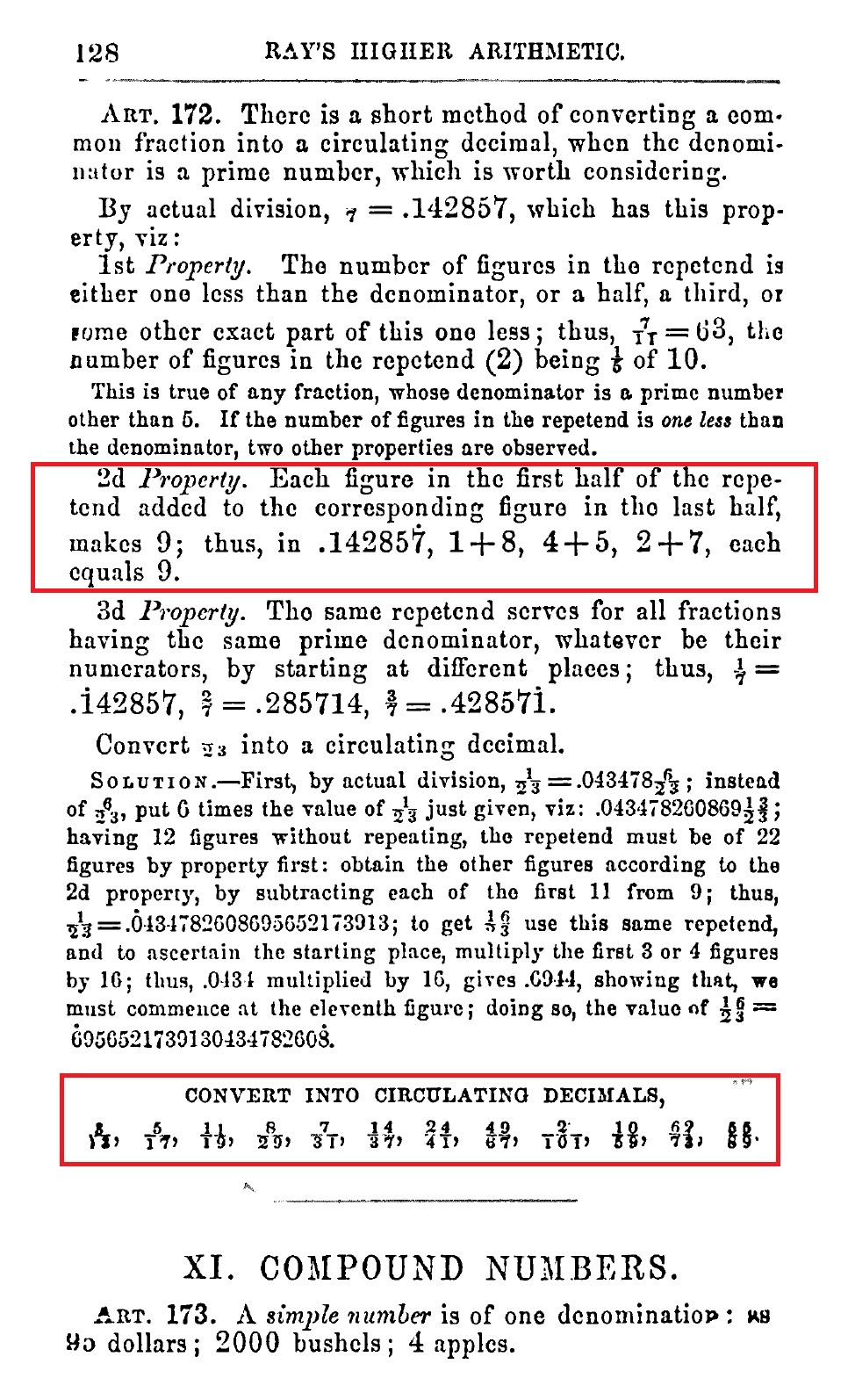
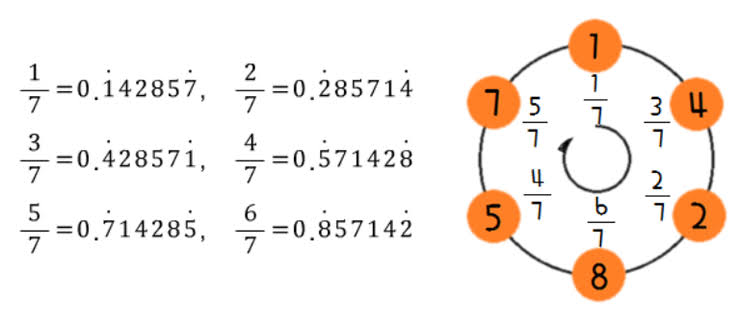
- The vortex theory of the atom was based on the observation that a stable vortex can be created in a fluid by making it into a ring with no ends. Such vortices could be sustained in the luminiferous aether, a hypothetical fluid thought at the time to pervade all of space.
- In the vortex theory of the atom, a chemical atom is modelled by such a vortex in the aether.
- Knots can be tied in the core of such a vortex, leading to the hypothesis that each chemical element corresponds to a different kind of knot. The simple toroidal vortex, represented by the circular “unknot” 01, was thought to represent hydrogen. Many elements had yet to be discovered, so the next knot, the trefoil knot 31, was thought to represent carbon.
- However, as more elements were discovered and the periodicity of their characteristics established in the periodic table of the elements, it became clear that this could not be explained by any rational classification of knots. This, together with the discovery of subatomic particles such as the electron, led to the theory being abandoned. (Wikipedia)
In the matrix pictured below, we list the first 24 elements of our domain, take their squares, calculate the modulo 90 congruence and digital roots of each square, and display the digital root factorization dyad for each square (and map their collective bilateral 9 sum symmetry). (PrimesDemystified)
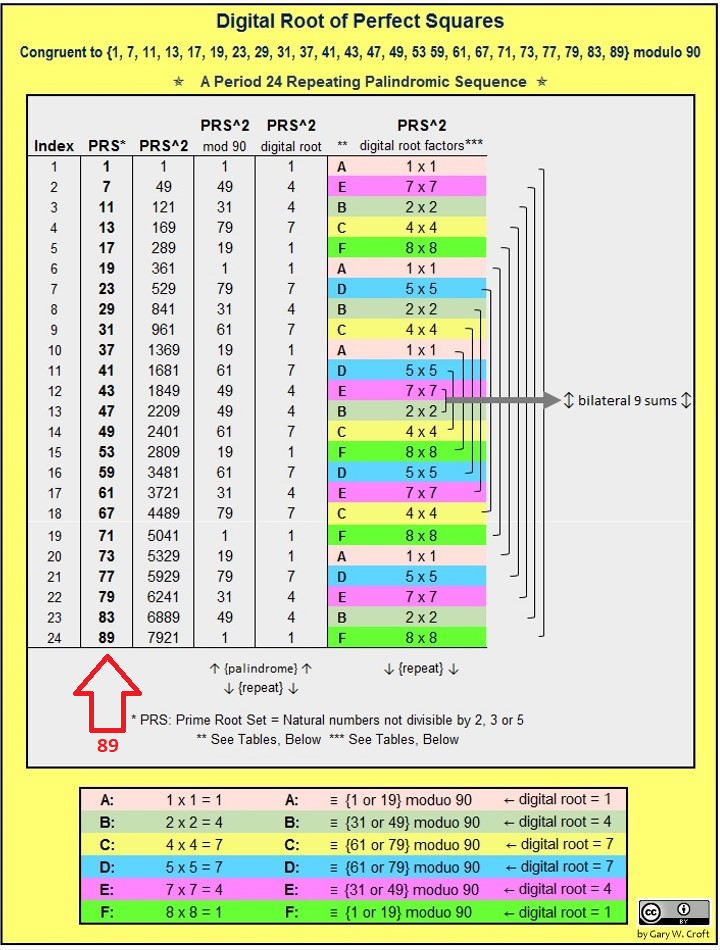
Not to mention this sequence possesses symmetries that dovetail perfectly with the prime root and Fibo sequences
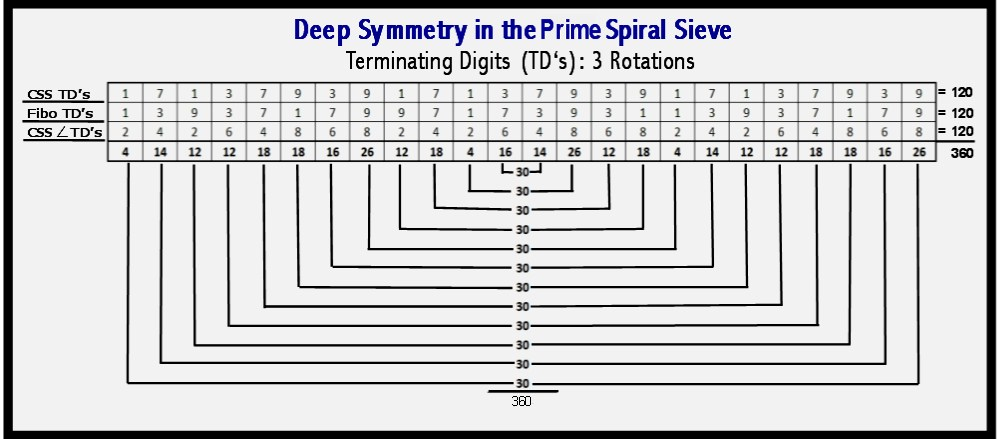
The terminating digits of the prime root angles (24,264,868; see illustration of Prime Spiral Sieve) when added to their reversal (86,846,242) = 111,111,110.
- And when you combine the terminating digit symmetries described above, capturing three rotations around the sieve in their actual sequences, you produce the ultimate combinatorial symmetry:
- The pattern of 9’s created by decomposing and summing either the digits of Fibonacci numbers indexed to the first two rotations of the spiral (a palindromic pattern {1393717997173931} that repeats every 16 Fibo index numbers) or, similarly, decomposing and summing the prime root angles.
- The decomposition works as follows (in digit sum arithmetic this would be termed summing to the digital root) of F17 (the 17th Fibonacci number) = 1597 = 1 + 5 + 9 + 7 = 22 = 2 + 2 = 4:Parsing the squares by their mod 90 congruence reveals that there are 96 perfect squares generated with each 4 * 90 = 360 degree cycle, which distribute 16 squares to each of 6 mod 90 congruence sub-sets defined as n congruent to {1, 19, 31, 49, 61, 79} forming 4 bilateral 80 sums. (PrimesDemystified)
Transforming particles into anti-particles, and vice versa, requires only the complex conjugate i → −i in our formalism. (Standard Model from an algebra - pdf).
Standard Model
There is a proof that it is impossible to embed all the three generations in E8 without the presence of additional particles that do not exist in the physical world.
This is a somewhat arbitrary choice, selected for leaving W3 and color invariant. Once the first generation of fermions, with correct charges and spins, are assigned to elements of e8, this T rotates them to the second and third generations.
- The second and third generations only have the correct spins and charges when considered as equivalent under this T. When considered as independent fields with E8 quantum numbers, irrespective of this triality relationship, the second and third generation of fields do not have correct charges and spins.
- The W3 and color charges are invariant under our choice of T but the spins and hypercharges are only correct through triality equivalence. This relationship between fermion generations and triality is the least understood aspect of this theory.
- It is conceivable that there is a more complicated way of assigning three generations of fermions to the E8 roots to get standard model quantum numbers for all three generations without triality equivalence.
There is such an assignment known to the author that gives the correct hypercharges for all three generations, but it is not a triality rotation and it produces unusual spins. A correct description of the relationship between triality and generations, if it exists, awaits a better understanding. (An Exceptionally Simple Theory of Everything - pdf)
The matter representations come in three copies (generations) of the 16 representation. The Yukawa coupling is 10H 16f 16f. *This includes a right-handed neutrino".
One may either include three copies of singlet representations φ and a Yukawa coupling (the “double seesaw mechanism”); or else, add the Yukawa interaction or add the nonrenormalizable coupling. (Wikipedia) mass of the heavy 24 gauge bosons, while mT = mHT is the mass of the triplet Higgs.
The cleanest signature for a Higgs sector with triplet fields would be the discovery of doubly charged Higgs Bosons. Like Pauli’s bold prediction of the neutrino and GIM’s bold prediction of the charm quark, the equally bold speculation of Kobayashi and Maskawa was proved absolutely correct, when the fermions of the third generation began to be discovered one by one. First came the tau lepton in 1975, closely followed by the bottom quark in 1977. There followed a 17-year hiatus till the 1994 discovery of the top quark, and another 6 years wait till the existence of the tau neutrino νwas confirmed in 2000.
Is the fermion red? green? blue? Does the fermion have isospin up? down? These five questions can be represented by an exterior algebra of 2⁵ or 32-complex dimensional.
This thesis constitutes a first attempt to derive aspects of standard model particle physics from little more than an algebra.
- Here, we argue that physical concepts such as particles, causality, and irreversible time may result from the algebra acting on itself.
- We then focus on a special case by considering the algebra R ⊗ C ⊗ H ⊗ O, the tensor product of the only four normed division algebras over the real numbers.
- Using nothing more than R ⊗ C ⊗ H ⊗ O acting on itself, we set out to find standard model particle representations: a task which occupies the remainder of this text.
- From the C ⊗ H portion, we find generalized ideals, and show that they describe concisely all of the Lorentz representations of the standard model.
- From the C ⊗ O portion, we find minimal left ideals, and show that they mirror the behaviour of a generation of quarks and leptons under su(3)c and u(1)em.
- These unbroken symmetries, su(3)c and u(1)em, appear uniquely in this model as particular symmetries of the algebra’s ladder operators. Electric charge, here, is seen to be simply a number operator for the system.
- We then combine the C ⊗ H and C ⊗ O portions of R ⊗ C ⊗ H ⊗ O, and focus on a leptonic subspace, so as to demonstrate a rudimentary electroweak model. Here, the underlying ladder operators are found to have a symmetry generated uniquely by su(2)L and u(1)Y.
- Furthermore, we find that this model yields a straight forward explanation as to why SU(2)L acts only on left-handed states.
- We then make progress towards a three-generation model. The action of C ⊗ O on itself can be seen to generate a 64-complex-dimensional algebra, wherein we are able to identify two sets of generators for SU(3)c.
- We apply these generators to the rest of the space, and find that it breaks down into the SU(3)c representations of exactly three generations of quarks and leptons.
Furthermore, we show that these three-generation results can be extended, so as to include all 48 fermionic U(1)em charges. (Standard Model from an algebra - pdf)
The coupling gives rise as the phase starts to roll down in the clockwise direction, it preferentially creates an excess of baryons over antibaryons.
The standard model involves particle symmetry and the mechanism of its breaking. Modern cosmology is based on inflationary models with baryosynthesis and dark matter/energy, which involves physics beyond the standard model. Studies of the physical basis of modern cosmology combine direct searches for new physics at accelerators with its indirect non-accelerator probes, in which cosmological consequences of particle models play an important role. The cosmological reflection of particle symmetry and the mechanisms of its breaking are the subject of the present review. (MDPI)
Subatomic particles such as protons or neutrons, which contain two or more elementary particles, are known as composite particles.
The Standard Model of Particle Physics, describes for us all know fundamental interaction in nature till date, with the exception of Gravity (work on this front is going on). Here is a summary of the fundamental content of the standard model
- There are three families of particle, the Quarks, the Leptons and the Gauge Bosons. The Quarks in groups of three forms the composite particles such as the Protons, along with the electron this forms ordinary matter.
- The Gauge Bosons are the ones those are responsible for interactions. The Quarks interact among themselves by the exchange of a Gluon these are responsible for the strong nuclear force.
- The newly discovered Higgs Boson interacts with all the Quarks and the first group of Leptons (electron, muon and tau) providing them with their mass. The neutrinos which are the other Leptons originally were thought to have zero mass, but recent discoveries argue that this is not the case.
- The Weak bosons interact with both Leptons and Quarks, these are responsible for the Weak nuclear forces. The exchange of photon is responsible for the Electromagnetic Force.
They interact, they transfer energy and momentum and angular momentum; excitations are created and destroyed. Every excitation that’s possible has a reverse excitation. (Quora)
When we take all the forces that we understand, i.e., not including gravity, and write down the QFT version of them, we arrive at the predictions of the Standard Model.
This is where the idea of 12 fermion fields and 12 boson fields come from. These fields are excitations of the underlying theories (the Standard Model) that describe the known Universe in its entirety, and include:
- The six (6): up-, down-, strange-, charm-, bottom-, top-quarks, and their antiquark counterparts,
- The three (3) charged (electron, muon, tau) and three (3) neutral (electron neutrino, muon neutrino, tau neutrino) leptons, and their antimatter counterparts,
- The eight (8) gluons (because of the eight possible color combinations),
- The one (1) electromagnetic (photon) boson,
- The two (2) weak (W-and-Z) bosons,
- And the Higgs boson.
The quarks and leptons are fermions, which is why they have antimatter counterparts, and the W boson comes in two equal-and-opposite varieties (positively and negatively charged), but all told, there are 24 unique, fundamental excitations of quantum fields possible. This is where the 24 fields idea comes from. (Forbes)
Assigning a specific mass, length, time, and charge metrics based on new dimensional relationships and the Planck constant (which defines Higgs mass).
The discovery of neutrino oscillations indicates that the Standard Model is incomplete, but there is currently no clear evidence that nature is described by any Grand Unified Theory. Neutrino oscillations have led to renewed interest toward certain GUT such as SO(10). (Wikipedia)
These include generating variants of their abundance profile, assigning taxonomy and finally generating a rooted phylogenetic tree for the Standard Model.
Here is an elegant model to define the elementary particles of the Standard Model in Physics.
- The black spheres are the bosons, the green ones leptons and the rest of the colored ones Murray Gell-Mann’s quarks (red for Generation I, blue for II and orange for III).
- Higgs Boson (aka the God particle) that does not have charge is the vertex between the matter and anti-matter particles.
- The z-boson and its counterpart would lie in the centroids of the tetrahedrons created by folding the triangles to meet up at the Higgs particle.
The next step is to re-gigg the model to account for the collisions and annihilations. Gluons and Photons that don’t have mass are not in the model, but will be the consequences of the interactions. (Hypercomplex-Math)
All 15 matter particles are mirroring their corresponding doppelgangers (anti-particles) each others that could potentially explain dark matter.
Octonions and the Fano Plane provide mathematical structures related to exceptional Lie groups such as E8, and E8 contains the Standard Model gauge group SU(3)×SU(2)×U(1) as a subgroup, but no accepted theory currently derives the Standard Model from E8
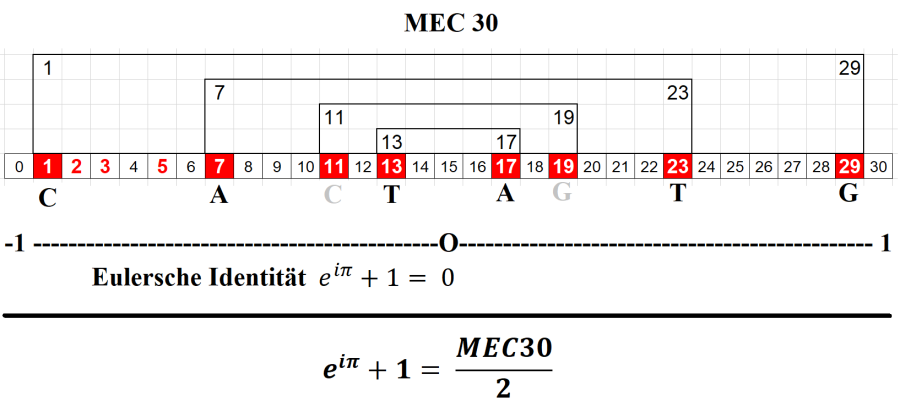
The path plan assume that a symmetric distribution of prime numbers with equal axial lengths from a middle zero axis = 15 is able to determine the distribution of primes in a given number space. This assumption finally bring us to the equation of Euler's identity.
Square Dimensions
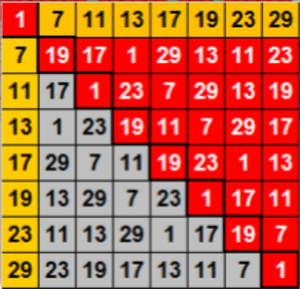
The cyclic behaviors of MEC30 are represented by the pure numerical of the 8 × 8 square product positions that sets continues infinitely.
In this one system, represented as an icon, we can see the distribution profile of the prime numbersas well as their products via a chessboard-like model in Fig. 4. This fundamental chewing
- We show the connection in the MEC 30 mathematically and precisely in the table Fig. 13. The organization of this table is based on the well-known idea of Christian Goldbach.
- That every even number from the should be the sum of two prime numbers. From now on we call all pairs of prime numbers without “1”, 2, 3, 5 Goldbach couples.
The MEC 30 transforms this idea from Christian Goldbach into the structure of a numerical double strand, into an opposite link of the MEC 30 scale. (MEC 30 - pdf)
To implement the above octagonal format of MEC30 then this project will use the unique location of .github across the GitHub platform as listed below:
- [user]/.github
- [user]/[user]/.github
- [user]/[user].github.io/.github
- [user]/[the other user's repos]/.github

- [orgs]/.github
- [orgs]/[orgs]/.github
- [orgs]/[orgs].github.io/.github
- [orgs]/[the other organizations's repos]/.github
Since the first member is 30 then the form is initiated by a matrix of 5 x 6 = 30 which has to be transformed first to 6 x 6 = 36 = 6² prior to the above MEC30's square.
A square system of coupled nonlinear equations can be solved iteratively by Newton’s method. This method uses the Jacobian matrix of the system of equations. (Wikipedia)
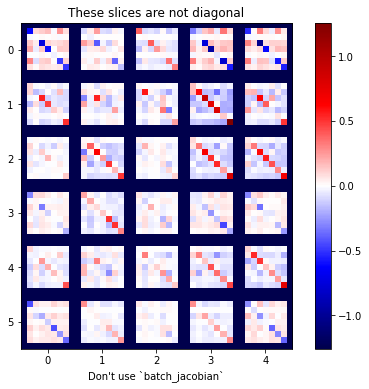
The preliminary basis having these properties that is used consists of the generalized Gell–Mann matrices according to the convention in Bloch Vectors - pdf.
Integration of ordinary and stochastic master equations is performed on density operators parametrized by 𝑑² real numbers, where 𝑑 is the dimension of the system Hilbert space.
- These are the components of the density operator as a vector in a basis that is Hermitian and, excepting the identity, traceless.
- Since the ordinary and stochastic master equations - pdf under consideration are trace preserving, one could neglect the basis element corresponding to the identity.
But as the module currently stands it is included to simplify some expressions and provide a simple test to make sure calculations are proceeding as they ought to. (PySME-pdf)
We found also a useful method called Square of Nine which was developed by WD Gann to analyze stock market behaviour base on astrological pattern.
He designed a new approach to predicting market behavior using several disciplines, including geometry, astrology, astronomy, and ancient mathematics. They say that not long before his death, Gann developed a unique trading system. However, he preferred not to make his invention public or share it with anyone. (PipBear)

They are used to determine critical points where an asset's momentum is likely to reverse for the equities when paired with additional momentum
The Hexagon chart begins with a 0 in the center, surrounded by the numbers 1 through 6. Each additional layer adds 6 more numbers as we move out, and these numbers are arranged into a Hexagon formation. This is pretty much as far as Gann went in his descriptions. He basically said, “This works, but you have to figure out how.”One method that I’ve found that works well on all these kinds of charts is plotting planetary longitude values on them, and looking for patterns. On the chart above, each dot represents the location of a particular planet. The red one at the bottom is the Sun, and up from it is Mars. These are marked on the chart. Notice that the Sun and Mars are connected along a pink line running through the center of the chart. The idea is that when two planets line up along a similar line, we have a signal event similar to a conjunction in the sky. Any market vibrating to the Hexagon arrangement should show some kind of response to this situation. (Wave59)
We are focusing to MEC30 so we end up this exponentiation by the famous quote from WD Gann himself stating an important changes by certain repetition of 30.
W.D. Gann: “Stocks make important changes in trend every 30, 60, 120, 150, 210, 240, 300, 330, 360 days or degrees from any important top or bottom.”
In line with 168 there is 330 located of 10th layer. Since the base unit of 30 repeats it self on the center then this 11 x 30 = 330 is pushed to the 10 + 1 = 11th layer.
The number 28, aside from being triangular wave of perfect pyramid, is the sum of the first 5 primes and the sum of the first 7 natural numbers.

The intervention of the Golden Ratio can be seen as a way to enter the quantum world, the world of subtle vibrations, in which we observe increasing energy levels as we move to smaller and smaller scales. El Nachie has proposed a way of calculating the fractal dimension of quantum space-time. The resulting value (Figure 7) suggests that the quantum world is composed of an infinite number or scaled copies of our ordinary 4-dimensional space-time.
Setting k=0 one obtains the classical dimensions of heterotic superstring theory, namely 26, 16, 10, 6 and 4, as well as the constant of super-symmetric (αgs=26) and non super-symmetric (αg=42) unification of all fundamental forces. As we have seen in section 2, the above is a Fibonacci-like sequence with a very concise geometrical interpetation related to numbers 5, 11 and φ. (Phi in Particle Physics)
d(43,71,114) = d(7,8,6) » 786

By exponentiation zones we will provide a direct route to unbroken internal symmetries, generated by SO(10), for the 2nd and 3rd generation of quarks and leptons.